Most guides on this topic pick a side. Platinum gets framed as the serious choice for serious buyers, and white gold gets treated as the budget version of the same thing. That framing is wrong, and it costs people money.
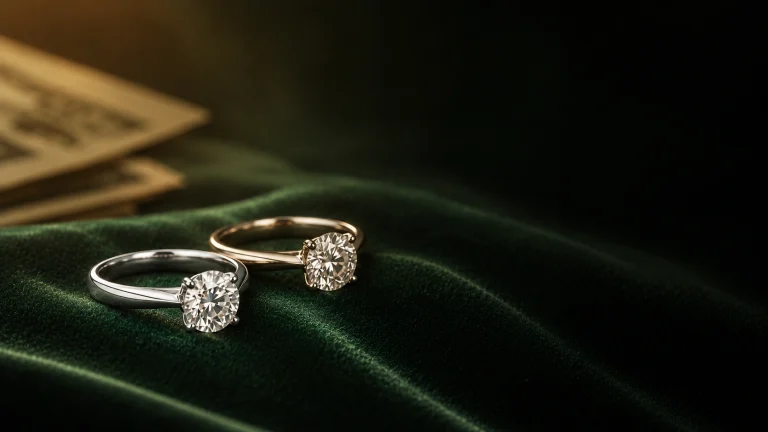
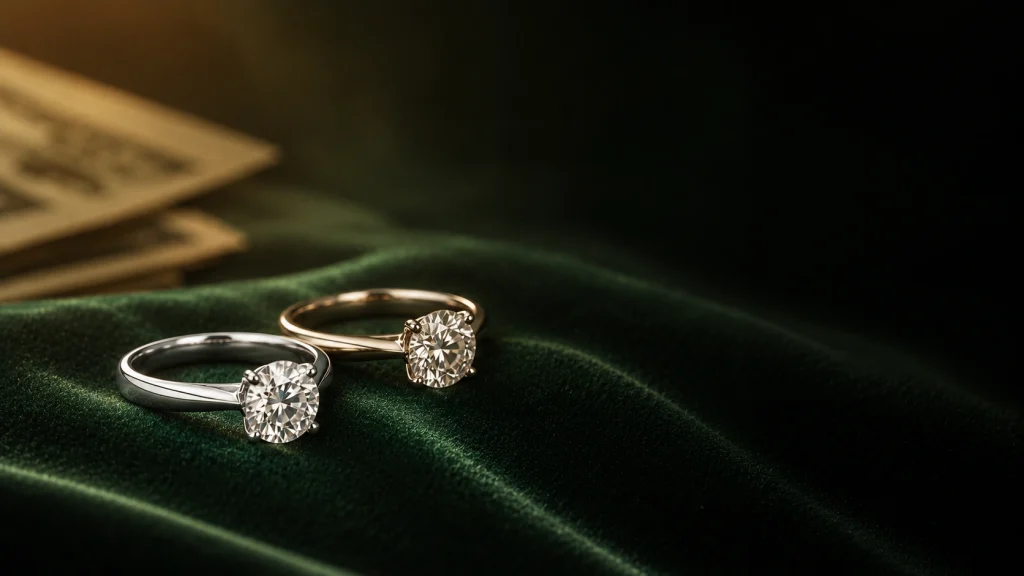
The truth is more practical. When new, a platinum ring and a white gold ring are hard to tell apart across a room, or even across a table. The differences show up later – in how they wear, what they ask of you over time, how they sit on your hand, and what you pay up front.
So the useful question isn’t “which metal is better.” It’s “which metal fits how I actually live, and what I actually care about.” This article walks through the real differences so you can answer that for yourself, whether you buy from us or not.
What’s actually different between platinum and white gold?
The two metals start from completely different places, and that’s the root of every other difference on this page. Understanding the basics here makes the rest obvious.
Platinum used in fine jewelry is almost pure – commonly around 95% platinum, with the rest a closely related metal for workability. It’s naturally a grayish-white color, and that color goes all the way through. There’s no coating involved.
White gold is different by nature. Gold is yellow, so “white gold” is yellow gold mixed with whiter metals to lighten it, then almost always finished with a thin layer of rhodium, a bright white metal from the platinum family. That rhodium plating is what gives white gold its crisp, mirror-white look in the store. If you want to understand the underlying gold itself – why 14k and 18k behave differently – we cover that in our guide to gold purity.
Here’s the part most people miss: a lot of what you’re reacting to when you admire a white gold ring is the rhodium on the surface, not the gold underneath. That single fact explains why the two metals diverge so much over time.
Further reading: Gold purity explained: from 9k to 24k
How they look new versus after years of wear
This is where the comparison gets real, because the showroom moment and the five-years-in moment are two different things. Both metals look great new. They don’t stay identical.
Fresh out of the workshop, rhodium-plated white gold is often the brighter, whiter, more reflective of the two. Platinum reads a touch warmer and grayer by comparison, with a slightly softer shine. If you put them side by side on day one, plenty of people actually prefer the white gold, and that’s a fair reaction to a real difference.
Then time does its thing. Rhodium is a surface layer, and surfaces wear. As the plating gradually thins – fastest on high-contact spots like the underside of a band – the warmer tone of the gold beneath starts to show through. White gold doesn’t “turn yellow” dramatically, but it can drift toward a warmer, slightly off-white cast as the coating ages. A quick replate brings the bright white right back.
Platinum ages in the opposite way. It doesn’t lose a coating because it never had one. Instead it develops a patina: countless tiny surface scratches that together dull the mirror finish into a soft, satiny sheen. Some people love this lived-in look and leave it. Others prefer the original shine and have it polished back. Either way, the metal itself isn’t going anywhere – it’s the same platinum, just wearing its history on the surface.
Maintenance and aging: which one asks more of you?
If there’s one practical thing that should drive your decision, it’s this section. The metals don’t just age differently – they ask for different kinds of upkeep, and people have strong preferences once they understand the trade.
White gold’s maintenance is the rhodium replating cycle. Every so often – often somewhere in the range of one to a few years depending on how hard you are on it, your skin chemistry, and where the ring sits – you may want it replated to restore the brightest white. It’s a routine, inexpensive job most jewelers do, but it is a recurring one, and it’s worth knowing about before you buy rather than being surprised by it later.
Platinum’s maintenance is simpler in kind but different in feel. There’s no plating to renew. You either embrace the patina as part of the ring’s character, or you have it polished occasionally to bring back the shine. Polishing platinum does remove a whisper of metal each time, but because platinum is dense and the loss is minimal, a well-made piece handles this for a very long time.
So the honest summary is that white gold trades a small, recurring cosmetic task for its bright finish, while platinum lets you choose between aging gracefully or an occasional polish. If the idea of ever taking a ring in for replating quietly annoys you, that’s a genuine signal pointing toward platinum. If it doesn’t bother you, white gold removes one of the few real reasons to pay the platinum premium.
Durability and everyday practicality
People assume the heavier, pricier metal must be the tougher one in every way. The reality is more interesting, and it changes how you should think about “durability” altogether.
Platinum is denser and noticeably heavier than white gold. On your hand, a platinum band has a substantial, weighty feel that many people genuinely enjoy and associate with quality. Others find it heavier than they’d like for everyday wear, especially in a chunkier design. This is pure preference, and it’s worth feeling both before deciding if you can.
When it comes to scratches, the two metals behave differently in a way that surprises people. Both scratch – every precious metal does. But when platinum scratches, the metal is mostly just displaced, pushed aside rather than lost, which is part of why it builds that patina instead of wearing thin. White gold tends to lose a little material when it’s scratched. Over many years, this is part of why platinum is often favored for holding small diamonds securely, since its prongs tend to wear down more slowly.
That said, “wears more slowly” is not the same as “indestructible,” and white gold is far from fragile. Millions of people wear white gold engagement rings and wedding bands every day for decades without drama. For most lifestyles, both metals are perfectly practical. The durability difference matters most at the extremes – very active hands, manual work, or a setting with tiny, delicate prongs holding important stones – and matters very little for typical daily wear.
Price and value: when the premium is worth it
Now the part everyone actually wants to know, handled the way we handle everything: with the markup pulled out into the open. Platinum almost always costs more than white gold for a comparable piece, and it’s worth understanding exactly why before you decide whether that’s money well spent.
Two things drive platinum’s higher price. First, you’re simply buying more metal by weight, because platinum is dense and jewelry platinum is nearly pure, whereas 14k white gold is a bit over half gold by weight. Second, platinum is harder to work, which adds labor at the bench. Those are real, substance-based reasons – not a “rarity” story.
That last point deserves a flag, because platinum is often sold on an air of exclusivity. In a jewelry context, the premium you pay is mostly about material weight and craft, not some dramatic scarcity that makes the ring inherently more valuable to own. Pay for platinum because you want what platinum does – the natural white, the weight, the no-plating ownership – not because it sounds more impressive.
Here’s the value logic we’d actually use. If natural whiteness, heft, and skipping the replating cycle matter to you, platinum’s premium buys real things you’ll notice, and it’s justified. If those things are neutral to you, that same money is almost always better spent on a larger or higher-quality center stone, where the visible payoff is far greater. A white gold setting with a better stone beats a platinum setting with a smaller one for most buyers, most of the time.
Further reading: Why premium jewelry is so expensive: the real cost of jewelry in 2026
Allergies and sensitive skin
This deserves its own short section because it’s the one area where the choice can be about comfort rather than looks, and where loose advice online can genuinely mislead people.
Platinum is hypoallergenic for the vast majority of wearers, largely because jewelry platinum is nearly pure and doesn’t rely on alloy metals that commonly cause reactions. If you’ve had trouble with metals irritating your skin in the past, platinum is generally the safer starting point.
White gold is more of an “it depends,” and the reason is the alloy. Historically, some white gold was alloyed with nickel, which is one of the most common causes of metal allergies. Plenty of modern white gold uses nickel-free formulations instead, and the rhodium plating also sits between your skin and the gold while it’s intact. So white gold can be perfectly comfortable for sensitive wearers – but because the answer depends on the exact alloy, it’s worth asking specifically rather than assuming. If you have a known nickel sensitivity, tell whoever’s making your ring, and have them confirm the composition.
Who should choose platinum?
Platinum makes the most sense for a fairly specific set of priorities. You’re a strong candidate if you want a white metal that stays white on its own, with no plating to refresh down the line. It also suits you if you like the substantial, dense feel of a heavier ring and read that weight as part of the appeal.
It’s a sound choice for sensitive skin, since the near-pure composition sidesteps the alloy metals that tend to cause reactions. And it fits people who genuinely like the idea of a metal that ages into a soft patina they can either keep or polish away on their own terms. If two or three of those describe you, platinum’s premium is buying you things you’ll actually feel.
Who should choose white gold?
White gold is the smarter call for a lot of buyers, and there’s nothing second-best about it. It’s the natural choice if you want the bright white-metal look without paying platinum prices, which frees up budget for the part people actually look at: the stone.
It also suits you if a lighter ring is more comfortable for all-day wear, and if a periodic replating visit sounds like a minor, totally manageable bit of upkeep rather than a dealbreaker. For buyers who’d rather put their money into a bigger or better center stone than into the metal holding it, white gold is usually the rational answer – and it’s the one we’d point most people toward unless something on the platinum list spoke to them directly.
The honest takeaway
There’s no universal winner here, and anyone who tells you otherwise is selling something. Platinum isn’t automatically superior – it’s different, with a specific set of strengths you pay extra for. White gold isn’t a compromise – it’s often the more sensible choice, and it lets you spend where it shows.
Decide on your priorities first, then pick the metal that serves them. Care most about natural whiteness, weight, or sensitive skin? Lean platinum. Care most about value, a lighter feel, or a better stone for the same total budget? Lean white gold. The metal that matches how you live beats the one that merely sounds more serious.
Frequently asked questions
Is platinum better than white gold?
No, not in any absolute sense. Platinum is naturally white, heavier, and usually better for sensitive skin, while white gold is lighter, less expensive, and easy to keep bright with occasional replating. “Better” depends entirely on which of those things you care about.
Does white gold turn yellow over time?
It doesn’t turn dramatically yellow, but it can drift toward a warmer, slightly off-white tone as the rhodium plating gradually wears and the gold underneath shows through. A quick, inexpensive replate restores the bright white. How often you’d want that depends on wear and your skin chemistry.
Does platinum scratch more easily than white gold?
Platinum does pick up surface scratches, and it actually shows a soft patina sooner than many people expect. The difference is that platinum’s scratches mostly displace metal rather than remove it, so the ring holds up well over the long run and can be polished back to a shine. Both metals scratch – platinum just wears differently.
Which metal is better for an engagement ring?
Both are excellent and widely used. Platinum’s slower prong wear can be reassuring for holding important stones securely, while white gold gives you the same white look for less, leaving more budget for the center stone. For most people, that budget trade-off is the deciding factor.
Is platinum worth the extra cost?
It’s worth it if you specifically want natural whiteness, a heavier feel, no replating cycle, or a hypoallergenic metal. If those don’t matter much to you, the money usually does more visible good spent on a larger or higher-quality stone in a white gold setting.
Still not sure which way to go?
If you’re torn, you don’t have to guess in the abstract. When you send us your idea, we’ll quote it in both metals so you can compare the real numbers side by side and decide based on your priorities rather than a sales pitch. Request a quote and tell us you’re weighing platinum against white gold – we’ll lay out the honest trade-offs for your specific piece.