Buying an engagement ring feels overwhelming because the industry shows you everything at once. Shapes, settings, metals, carat weights, certificates, and a wall of prices that seem to follow no logic. It’s a lot of variables stacked on top of an emotional moment, which is exactly the condition under which people overpay.
The fix is boring and effective: make the decisions one at a time, in the order that each one actually depends on the last. You pick the shape before the setting because the setting is built around the shape. You pick the metal before the band because the band’s color and detailing follow the metal. Sequence turns chaos into a short list of yes-or-no calls.
This is a complete guide to choosing an engagement ring written the way we’d explain it to a friend across the table, not the way a sales floor explains it. At each step, we’ll tell you what changes appearance, what changes durability, and what changes price. We’ll also flag where a price jump buys you something real and where it mostly buys a story.
We’re a custom atelier, so we have a bias worth disclosing up front: we’d rather you understand the ring than be impressed by it. That’s the whole approach here.
First, understand the anatomy of a ring
You don’t need to talk like a jeweler. You need just enough vocabulary to make clean decisions and ask sharp questions, which is about five words.
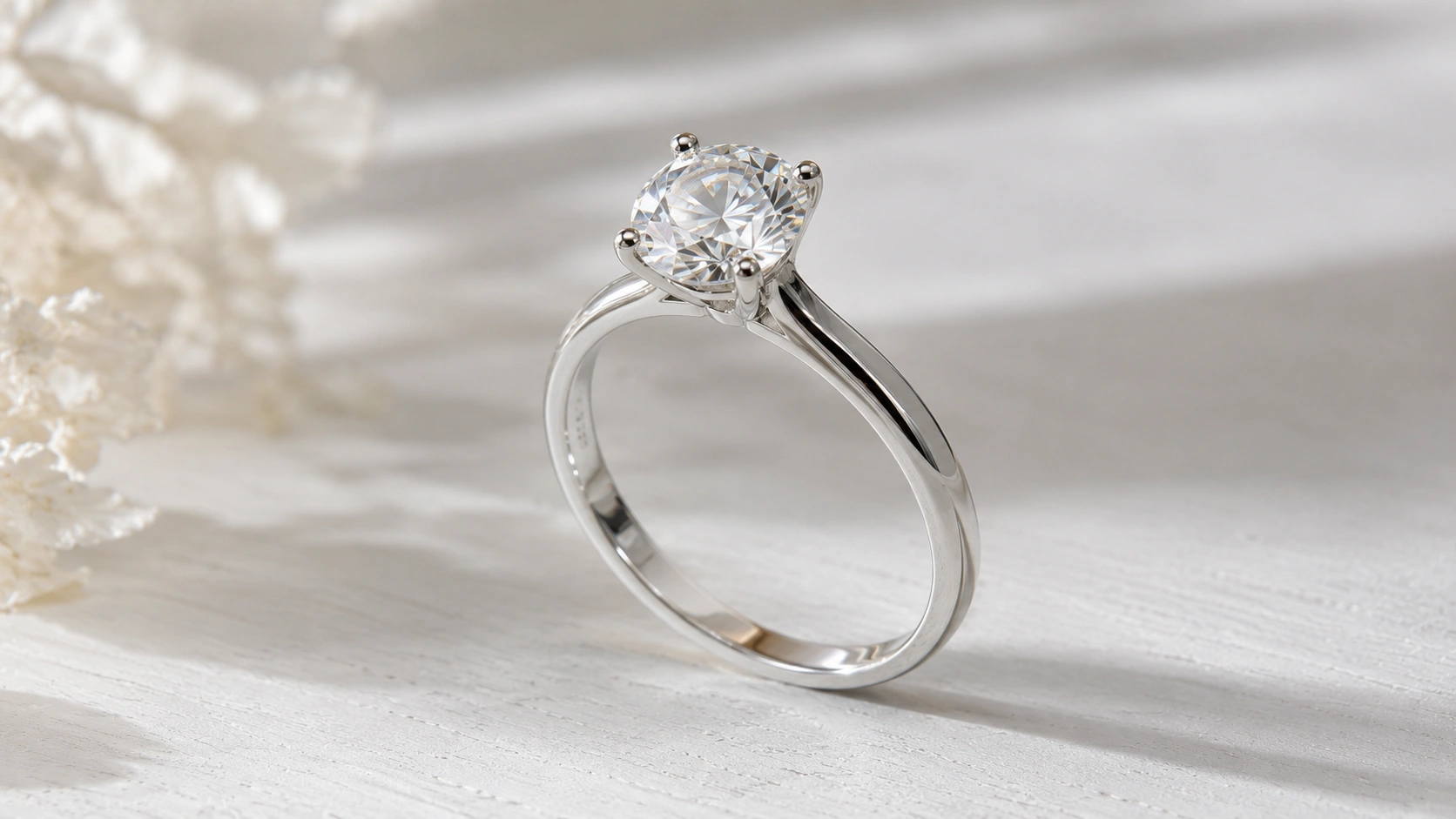
The center stone is the main event, the gem everyone looks at. The setting (sometimes called the head) is the metalwork that holds that stone in place, usually with prongs, which are the little claws that grip it. The gallery is the structure underneath the stone, between the setting and your finger. The shank, also called the band, is the ring itself, the part that circles your finger.
That’s the whole map. Center stone, setting, prongs, gallery, band. Every other term you’ll hear is a variation on one of those five parts.
Knowing the anatomy matters because it tells you where your money goes and where wear and tear happens. The stone is usually the largest single cost. The setting is where most repairs originate over a lifetime, because prongs are small and they take the daily knocks. The band is where comfort lives. When you can name the parts, a quote stops being a mysterious lump sum and becomes a set of choices you can actually evaluate.
Decision one: choose the stone shape first
Shape is the single biggest decision for the ring’s character. Before metal, before setting, before any detailing, the outline of the stone sets the entire personality of the piece. Change the shape and you’ve changed the ring more than almost anything else you could do.
One quick clarification, because the industry blurs it. Shape is the outline of the stone as you look down on it: round, oval, pear, and so on. Cut refers to how well that stone is faceted and proportioned to return light. A poorly cut round and a beautifully cut round are the same shape but very different stones. For this decision, you’re choosing shape. Cut quality is a separate lever you pull later, and it’s one of the few places where paying for quality genuinely shows.
Here’s the honest money note. Round brilliants are usually the most expensive shape per carat, for two reasons: they return light better than any other shape, and cutters waste more of the rough crystal to produce one. You’re paying for optics and for yield. If you specifically love a round, that premium is buying something real. If you don’t care that it’s round and just defaulted to it, you’re paying extra for a default.
Elongated shapes are where value hides. Oval, pear, and marquise stones spread their weight across a longer surface, so they often look larger face-up than a round of the same carat weight. You can get more visible size for the same money, which is one of the few free lunches in this category.
Further reading: Diamond & Gemstone Size Guide: What 0.5, 1, and 2 Carat Really Look Like
The popular shapes and what they actually change
A round brilliant is the safe, maximum-sparkle choice, and it carries a price premium for that. An oval gives you that brilliant sparkle in a shape that reads larger for its weight and gently lengthens the finger, which is why it’s become so popular for buyers who want size without the round’s price per carat.
A pear is a round and a marquise combined, with a soft end and a point. It’s distinctive, flattering, and slightly more of a commitment to a specific look. Cushion shapes are square-to-rectangular with rounded corners and a softer, slightly vintage glow that hides inclusions reasonably well.
A princess cut is the square option with sharp corners and strong sparkle, often a touch cheaper than round because cutters waste less of the rough. Then there’s the architectural family: emerald and Asscher. These use long, open facets (called step cuts) that trade fireworks for clean, hall-of-mirrors flashes. They look sharp and modern, and they’re less forgiving, because those open facets show inclusions and any cloudiness more readily than a busy brilliant cut does. Choose them for the look, and put a little more attention into clarity when you do.
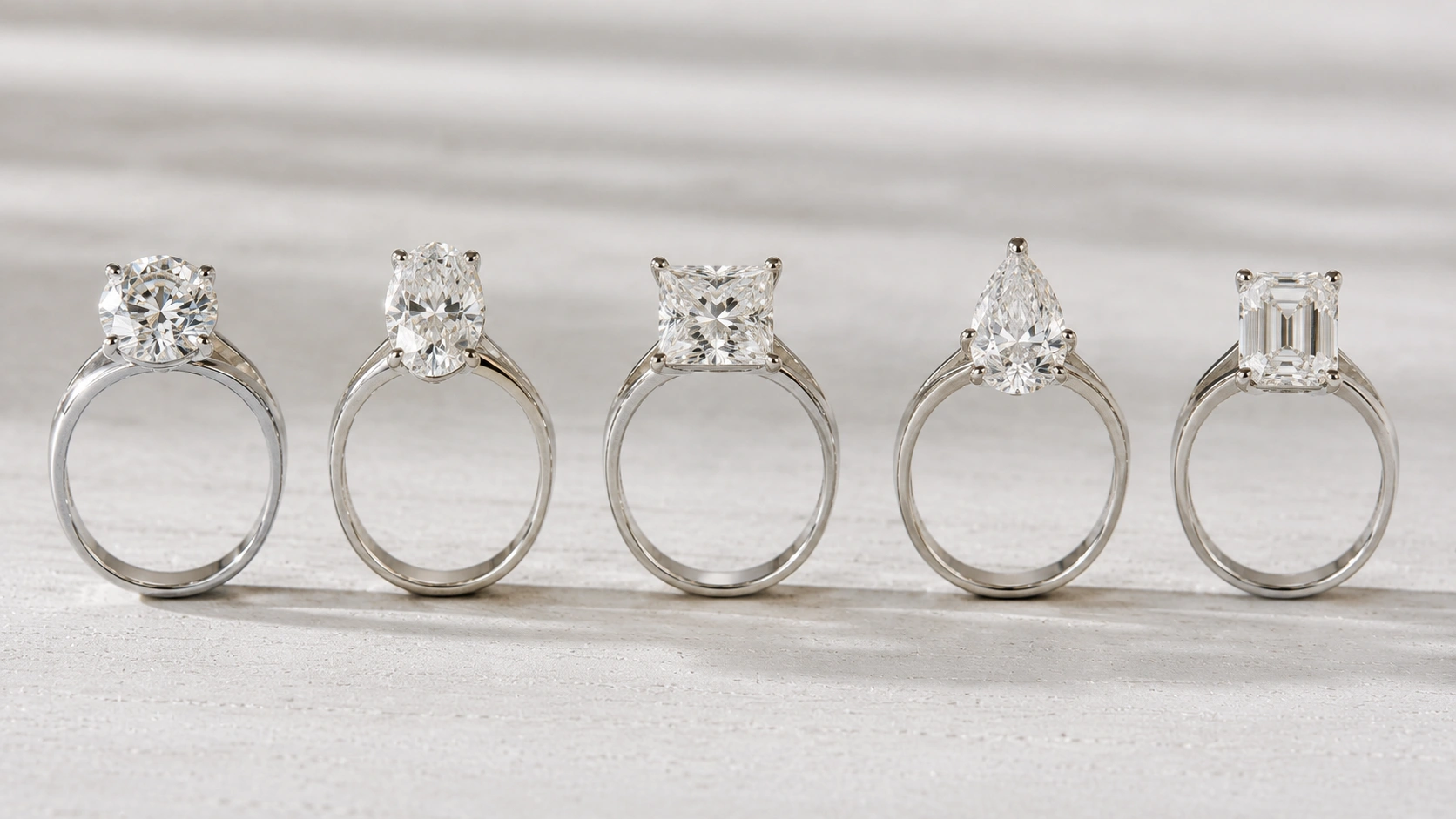
If you only get one thing right, get the shape right. It’s the decision you’ll see every single day, and it’s the hardest to fake your way around with marketing.
Decision two: choose the setting
The setting does two jobs at once. It defines the ring’s style, and it changes how big and how protected the center stone looks and is. The same stone in two different settings can look like two different budgets, which is exactly why this decision deserves real attention.
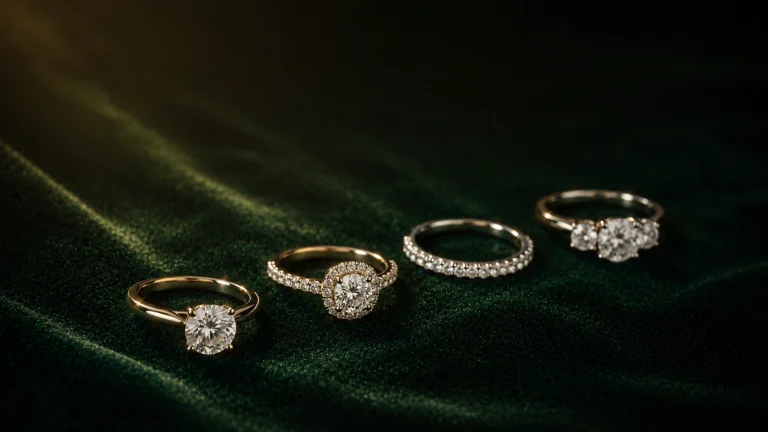
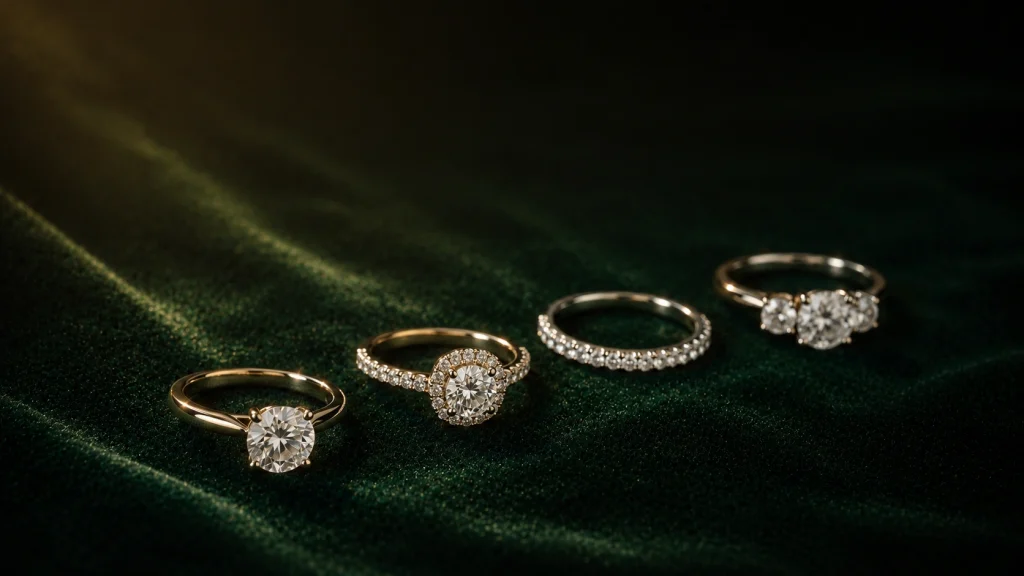
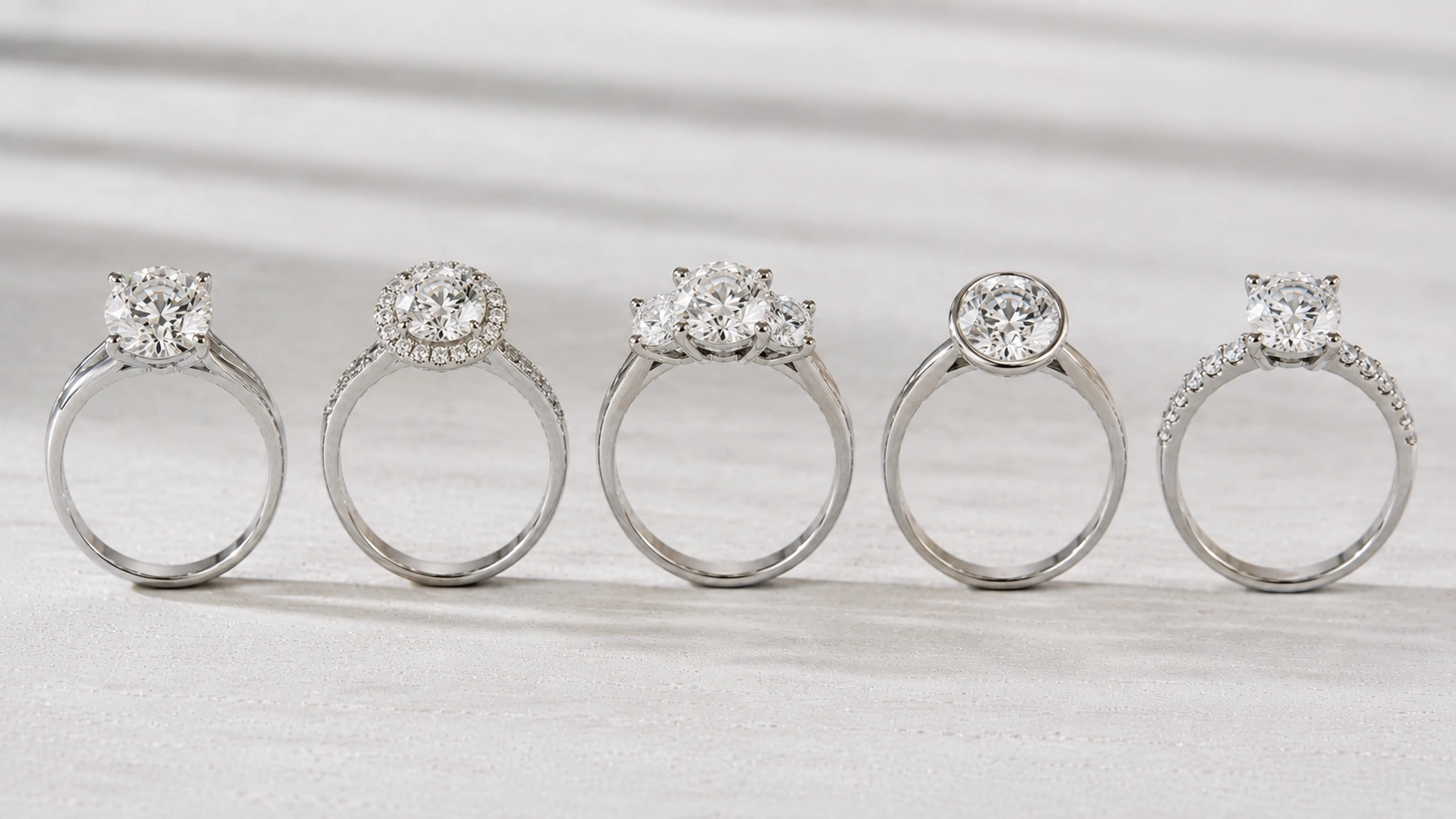
Most of the solitaire vs halo engagement ring debate comes down to this. A solitaire is the cleanest expression of a single stone on a band, and it lets the shape you just chose speak for itself. A halo wraps the center stone in a ring of small accent stones, which makes the center look noticeably larger and adds sparkle for relatively little money. If maximizing apparent size per dollar is your goal, a halo is one of the most effective tools available. If you love the purity of one stone, a solitaire is hard to beat and never looks dated.
This is the heart of any honest discussion of engagement ring settings, cuts, and styles: the setting is a lever for both appearance and durability, and the two don’t always point the same direction.
The main settings, honestly compared
A solitaire is the simplest and usually the most affordable structure, and it puts all the visual weight on the stone. Its only real trade-off is that a single stone on tall prongs has nowhere to hide, so the stone’s quality and the prongs’ security both matter more.
A halo adds perceived size and sparkle cheaply, with one honest caveat: those tiny accent stones sit in tiny settings, and very small prongs need occasional attention over the years. A hidden halo puts that ring of accent stones underneath the center stone instead of around it, so you get a sparkle surprise from the side without changing the face-up outline. It’s a detail you feel more than you see, and it adds cost for a subtle payoff.
A three-stone setting flanks the center with two smaller stones, which changes both the symbolism and the visual balance, and gives you a wider, more substantial look across the finger. A bezel wraps a thin metal rim fully or partially around the stone instead of using prongs. It’s the most protective mainstream setting, it snags on nothing, and it’s excellent for active hands. The trade-off is purely aesthetic: a bezel covers the stone’s edge, so a stone can read slightly smaller and a touch less sparkly than the same stone held high in prongs.
Pavé refers to a band (or setting) lined with tiny stones set close together, which adds a continuous shimmer along the ring. It looks rich and it raises both the price and the long-term maintenance, because more small stones means more small things to check. As a rule worth remembering, height and tiny stones are where daily-wear practicality goes to negotiate. The taller and more delicate the setting, the more beautiful it can be and the more attention it asks for over a lifetime of dishes, gym sessions, and coat pockets.
Decision three: choose the metal
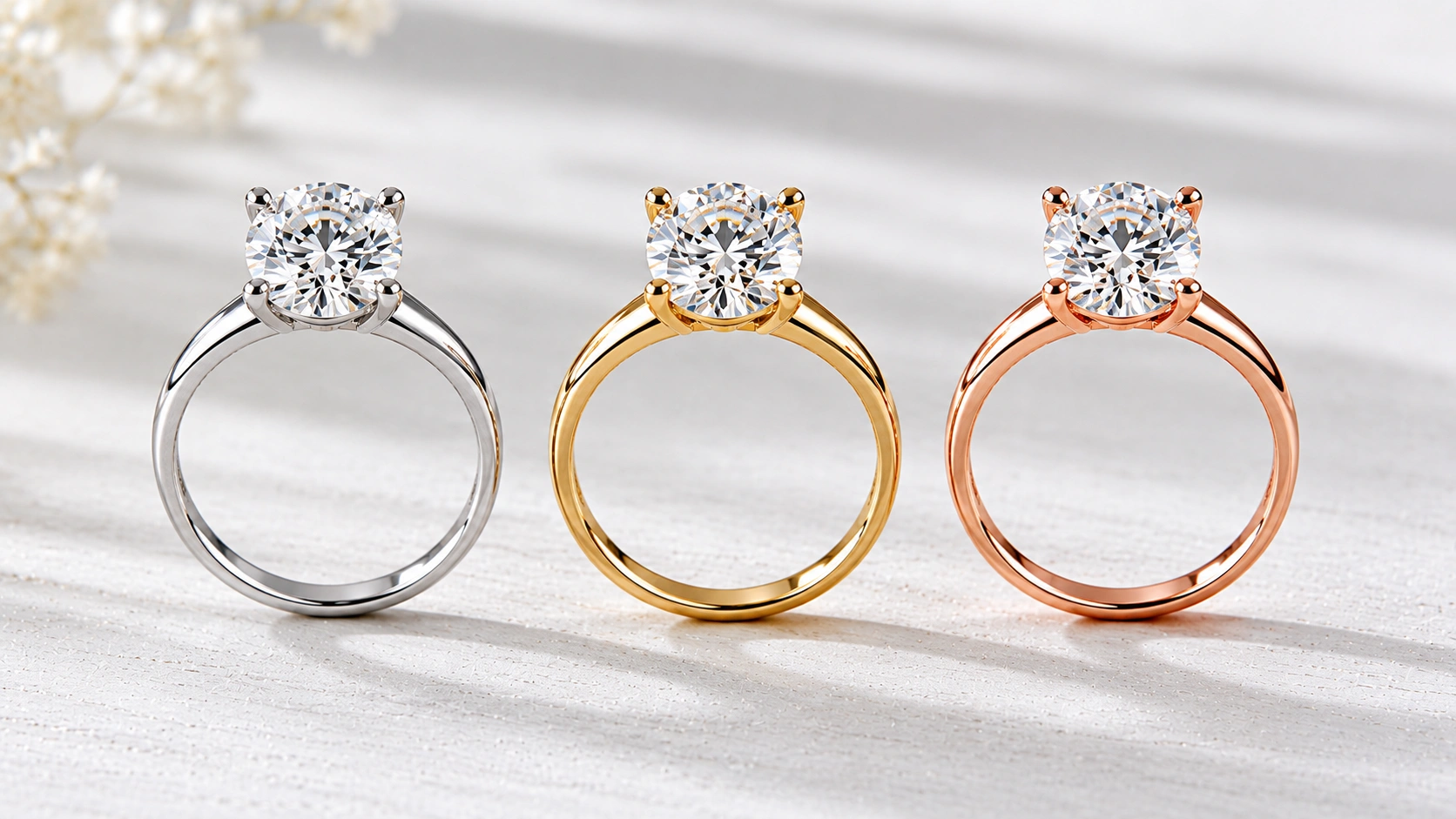
Metal sets the mood of the entire ring, and it changes the personality more than most buyers expect before they see the comparison in person. The same design in white, yellow, and rose gold can feel modern, classic, or warm and vintage, with nothing else altered.
White metal reads crisp and contemporary and keeps the focus on the stone’s white sparkle. Yellow gold reads classic and warm and has come back strongly in recent years. Rose gold reads soft, romantic, and a little distinctive. There’s a light, sensible point about skin tone here and we’ll keep it light: warmer metals tend to flatter warmer skin and cooler metals cooler skin, but this is a preference nudge, not a rule, and the right answer is whichever one the wearer keeps reaching for. Don’t let anyone sell you a metal as if it were a diagnosis.
A good engagement ring metal guide has to talk about upkeep, because that’s where the real differences live. White gold is naturally a faint warm gray, so it’s plated with rhodium to look bright white, and that plating wears and needs occasional reapplication every few years. Yellow and rose gold have no plating to wear off and are the lowest-maintenance options. Platinum is naturally white, so it never needs plating, and it’s denser and heavier, which many people read as feeling more substantial on the hand.
Further reading: Gold purity explained: from 9k to 24k
14k or 18k engagement ring: what actually matters
This is the comparison where the most marketing nonsense gets sold, so here’s the plain version. The number is the purity: 14k gold is about 58% pure, 18k is 75% pure. Higher purity gives 18k a slightly richer, deeper color, especially noticeable in yellow and rose. Lower purity makes 14k harder and more scratch-resistant, because the alloy metals mixed in are tougher than pure gold.
So the 14k or 18k engagement ring decision is a genuine trade-off, not a quality ladder. You’re choosing between a touch more color richness (18k) and a touch more everyday durability and a lower price (14k). Neither is better in the abstract. For very active hands and tighter budgets, 14k is the practical pick. For buyers who want the deepest color and don’t mind being a little gentler, 18k earns its place.
Platinum sits at the premium end of the price range, and it’s worth being honest about why. Part of that price reflects real properties: it’s denser, it holds prongs securely, and it never needs replating. Part of it is positioning. Platinum is often sold on rarity, and in a jewelry context that rarity narrative is more about marketing than about any scarcity you’ll ever feel as a wearer. Choose platinum because you want its weight and low maintenance, not because a sign told you it’s the prestigious option. We’ve written separately on gold purity and on platinum versus white gold if you want the full breakdown before you commit.
Decision four: choose the band or shank style
The band is the decision people skip, and it quietly shapes the whole ring. A plain band keeps everything calm and lets the stone and setting carry the piece. A pavé band lines the shank with tiny stones for extra continuous sparkle, which looks rich and raises both the price and the maintenance, for the same reason it does anywhere else: more small stones, more small things to maintain.
Beyond plain and pavé, the shape of the band changes how the center stone feels. A tapered band narrows as it approaches the stone, which makes the center look larger by comparison. A cathedral band sweeps up to meet the setting with graceful arches, adding height and presence. A twisted or split band adds movement and a more distinctive personality. Each of these is a real aesthetic choice, and each adds a little cost and a little visual weight.
The useful way to think about it is whether you want the band to stay quiet or to join the conversation. Keep it quiet (plain or gently tapered) when the stone and setting are already doing the work, when the wearer prefers clean lines, or when stacking a wedding band flush against it matters. Let the band speak (pavé, twisted, cathedral) when the wearer loves detail and you want the ring to feel fuller without buying a bigger center stone. A busier band can also be a smart way to add presence for less than the cost of more carats, as long as the wearer actually likes detail rather than tolerating it.
Decision five: put it all together without overpaying
Now you assemble the calls into one ring, and this is where knowing what changes the look pays off. Spend where the money changes what you see and how the ring survives daily life. Save where the money mostly buys a story.
Spend on the shape you actually want, because it’s the decision you’ll notice forever and the one least worth compromising. Spend on cut quality within that shape, because a well-cut stone simply looks better in every light and it’s a difference you can see. Spend on the setting when it changes the outcome you care about, whether that’s a halo for size, a bezel for a rough-and-tumble lifestyle, or sturdier prongs for peace of mind. And spend on metal when the wearer’s life demands it, like platinum or 14k for hands that take a beating.
Save by not paying a premium for a feature the wearer doesn’t care about. The round-cut premium is worth it if they love round and wasted if they merely defaulted to it. Save by not confusing more detail with better design, because a clean ring the wearer loves beats a busy one that impressed a salesperson. Save by being skeptical of any upgrade justified mostly by prestige rather than by something you can point to on the ring. When a price is defended with feelings instead of a visible or functional difference, that’s usually the signal to pause.
Further reading: Why premium jewelry is so expensive: the real cost of jewelry in 2026
Three practical ring profiles
To make this concrete, here are three coherent directions. They’re starting points, not personality tests.
The minimal and classic profile is a round or oval solitaire on a plain or lightly tapered band, in 14k white or yellow gold. It’s clean, it ages well, it stacks easily with a wedding band, and it spends money on the stone rather than the metalwork. This is the value-dense choice that almost never looks wrong.
The balanced and elegant profile is an oval or cushion stone in a hidden halo or three-stone setting, on a gently detailed or pavé band, in 14k or 18k. It reads as considered and full without tipping into heavy, and it’s where most buyers who want presence and longevity land.
The bold profile leans into character: a pear, marquise, or emerald cut, a halo or cathedral setting, rose gold or platinum, and a band with movement or pavé. It’s the most expressive direction and the one that rewards a wearer who genuinely loves detail, rather than someone who’ll quietly wish it were simpler in a year.
Common mistakes people make when choosing an engagement ring
The first mistake is shopping without a decision order, which is what makes the whole thing feel impossible. You end up comparing a halo to a metal to a carat weight, which aren’t comparable, instead of settling one variable before moving to the next.
The second is paying the round-brilliant premium out of habit. Round is the most expensive shape per carat, and that’s money well spent only if round is the shape the wearer actually wants. The third is mistaking more detail for better design, and ending up with a busy ring that photographs well and feels like too much on the hand.
The fourth is ignoring daily life when choosing the setting. A tall, delicate, prong-heavy ring is genuinely lovely and genuinely higher-maintenance, and a bezel or lower setting is the honest answer for active hands. Matching the setting to the life it’ll live prevents a slow drip of repairs and worry you didn’t sign up for.
Our honest take
There’s no universal best engagement ring, and any guide that hands you one is selling something. The best ring is the one that fits the wearer’s taste, the wearer’s hands, and a budget that doesn’t make the months afterward stressful. That’s a specific target, not a flattering generality.
Most of what inflates ring prices is real estate, brand premium, and a century of careful marketing, not craftsmanship you can see or durability you can feel. The materials and the work are knowable, the trade-offs are explainable, and once you understand both, the right ring usually gets simpler and less expensive, not more. Our job is to make that choice clearer, not more dramatic.
Frequently asked questions
How do I choose an engagement ring if I don’t know where to start?
Start with the shape of the center stone, because it sets the ring’s whole character and every later choice builds on it. Then pick the setting, then the metal, then the band, and finally weigh the budget trade-offs. Deciding one variable at a time is the fastest way to turn an overwhelming process into a short, confident list.
What is the best engagement ring shape?
There’s no single best shape, only the best shape for the wearer’s taste and hand. Round gives maximum sparkle at the highest price per carat, while oval, pear, and marquise give more visible size for the same weight, and emerald or Asscher give a cleaner, architectural look. Choose the outline the wearer is drawn to, then optimize cut quality within it.
Solitaire vs halo: which engagement ring setting should I pick?
Pick a solitaire if you want the purest expression of a single stone and a look that never dates. Pick a halo if you want the center stone to appear larger and sparklier for relatively little extra money. Both are excellent, and the choice is about whether you value simplicity or maximum apparent size.
Is a 14k or 18k engagement ring better?
Neither is better in the abstract, because they trade different strengths. 14k gold is harder, more scratch-resistant, and less expensive, which suits active hands and tighter budgets, while 18k gold has a slightly richer color and a higher price. It’s a preference between durability and color depth, not a quality ladder.
Does the metal really change how the ring looks?
Yes, more than most people expect before they see it. The same design in white, yellow, or rose gold can feel modern, classic, or warm and vintage with nothing else changed, and the choice also affects upkeep. White gold needs occasional rhodium replating, while yellow gold, rose gold, and platinum don’t.
Where should I spend more and where can I save?
Spend on the shape the wearer genuinely wants, on cut quality within that shape, and on any setting or metal that changes durability for their lifestyle. Save by skipping premiums for features they don’t care about, by not confusing more detail with better design, and by questioning any upgrade justified mainly by prestige rather than a visible or functional difference.
Are lab-grown stones a real way to save without losing beauty?
Yes. A lab-grown diamond is the same material as a mined one, and moissanite delivers even more fire at a fraction of the price, so both let you put more of the budget into size, cut, or setting. The look on the hand is what you’re buying, and lab-grown stones deliver that look honestly.
Ready to narrow it into a real ring?
When you’ve got a direction in mind, send us your inspiration, your budget, and the wearer’s style, and we’ll help you turn it into a coherent ring that actually makes sense, then quote it within 48 hours. You’ll approve a 3D render and a video of the finished piece before you pay a cent. That’s the whole model, and it’s built so you understand exactly what you’re getting before any money changes hands.